
Nursing and Somatics: Systemic Solutions
A reflection on Nurses’ Week 2026, my career, and how somatics can support nurses and health care
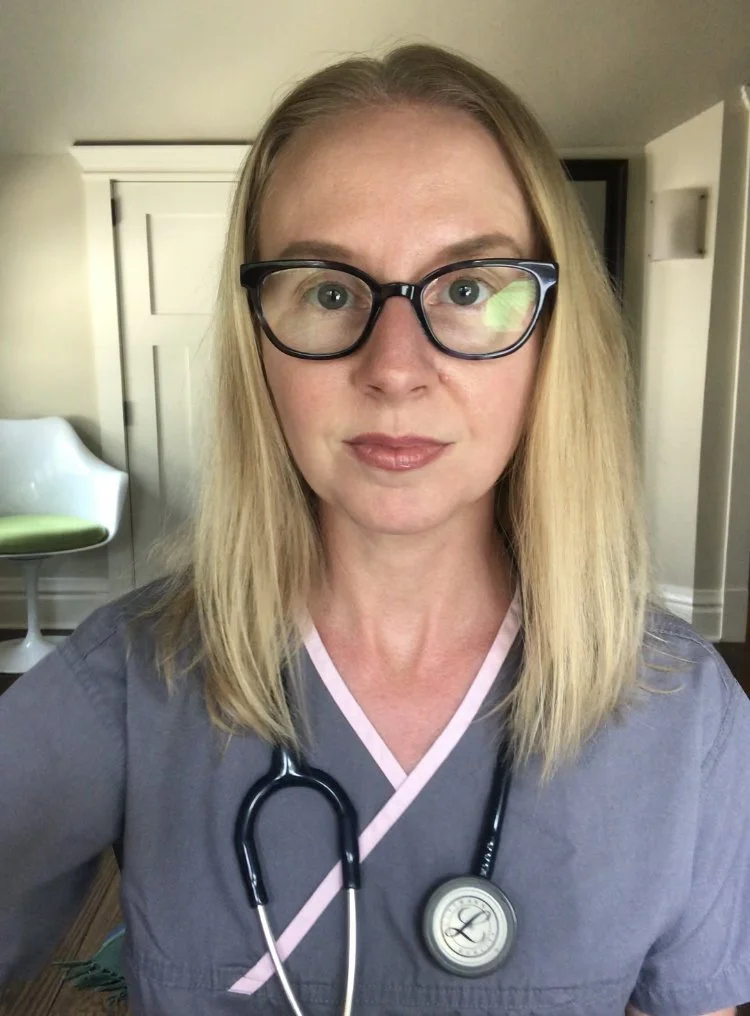
A person (the author herself, Rachel Kerr, DNP, RN) with straight shoulder-length blonde hair and blue-rimmed glasses wearing a gray scrub top facing the camera. They have a navy-blue Litmann stethoscope around their neck.
Nurses Week feels especially poignant this year of 2026. Though I haven’t worked at the bedside in years, I still hold my license and move through the world with a nurse’s perspective. Journeying through intense health experiences with fellow humans has deeply shaped me; my nursing background remains the bedrock of my multifaceted career and the lens through which I see the world.
Reflecting on my 21 years since my initial nursing licensure, I feel compelled to name the urgent need for supporting nurses. The power of skilled care, steady presence, and deep listening helps hold our civilization together. In life’s most pivotal moments of births, deaths, illnesses, and emergencies…nurses are there. A world without them is unimaginable.
Yet, nurses are leaving the field in droves due to burnout, toxic environments, and the stress of understaffing. With projections suggesting 40% of nurses may exit the workforce by 2030, we must ask: how do we slow this hemorrhage?
The answers involve complex systemic shifts in healthcare funding, workplace culture, legislation, and more. But another vital solution is simply providing nurses with the support they need to thrive. That is where my work lives.
Somatics supports nurses in relational attunement, nervous system regulation, embodied boundaries, transforming burnout, and multi-domain intelligence (think: gut sensing versus head knowledge). Through this work, nurses lean to center and ground themselves through the inherent ups and downs of their vital calling.
While I’ve coached individual nurses, I envision what’s possible if organizations proactively offered this somatic support. The results of reduced turnover, better patient satisfaction, and healthier, happier staff are essential. Given the high cost of losing nurses, investing in their well-being is wise. And, it’s a necessity.